EUVIP 2022 Special Session on
September, 2022, Lisbon, Portugal
Organizers:
- Hadi Amirpour, University Klagenfurt, Austria
- Christine Guillemot, INSA, France
- Christian Timmerer, University Klagenfurt, Austria
Brief description:
The importance of remote communication is becoming more and more important in particular after COVID-19 crisis. However, to bring a more realistic visual experience, more than the traditional two-dimensional (2D) interfaces we know today is required. Immersive media such as 360-degree, light fields, point cloud, ultra-high-definition, high dynamic range, etc. can fill this gap. These modalities, however, face several challenges from capture to display. Learning-based solutions show great promise and significant performance in improving traditional solutions in addressing the challenges. In this special session, we will focus on research works aimed at extending and improving the use of learning-based architectures for immersive imaging technologies.
Important dates:
Paper Submissions: 6th June, 2022
Paper Notifications: 11th July, 2022
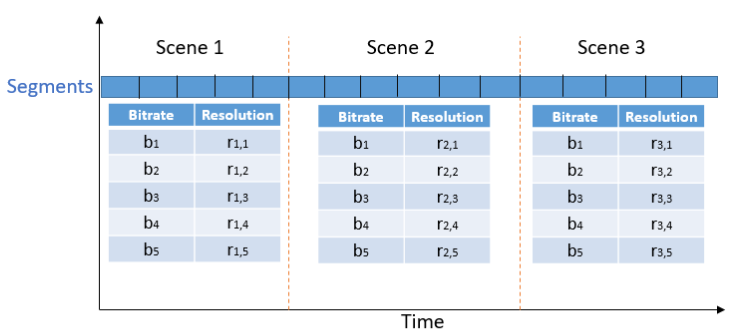
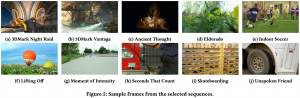
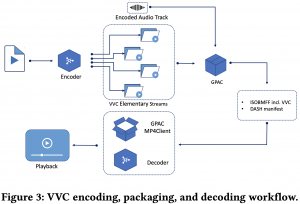 Abstract: There exist many applications that produce multimedia traffic over the Internet. Video streaming is on the list, with a rapidly growing desire for more bandwidth to deliver higher resolutions such as Ultra High Definition (UHD) 8K content. HTTP Adaptive Streaming (HAS) technique defines baselines for audio-visual content streaming to balance the delivered media quality and minimize streaming session defects. On the other hand, video codecs development and standardization help the theorem by introducing efficient algorithms and technologies. Versatile Video Coding (VVC) is one of the latest advancements in this area that is still not fully optimized and supported on all platforms. Stated optimization and supporting many platforms require years of research and development. This paper offers a dataset that facilitates the research and development of the aforementioned technologies. Our open-source dataset comprises Dynamic Adaptive Streaming over HTTP (MPEG-DASH) multimedia test assets of encoded Advanced Video Coding (AVC), High Efficiency Video Coding (HEVC), AOMedia Video 1 (AV1), and VVC content with resolutions of up to 7680×4320 or 8K. Our dataset has a maximum media duration of 322 seconds, and we offer our MPEG-DASH packaged content with two segments lengths, 4 and 8 seconds.