14th June 2022
[PDF]
Haichao Yao (Beijing Jiaotong University), Rongrong Ni (Beijing Jiaotong University), Hadi Amirpour (Alpen-Adria-Universität Klagenfurt), Christian Timmerer (Alpen-Adria-Universität Klagenfurt), Yao Zhao (Beijing Jiaotong University).
Abstract: In general, manipulated videos will eventually undergo recompression. Video transcoding will occur when the standard of recompression is different from the prior standard. Therefore, as a special sign of recompression, video transcoding can also be considered evidence of forgery in video forensics. In this paper, we focus on the detection and localization of video transcoding from AVC to HEVC (AVC-HEVC). There are two probable cases of AVC-HEVC transcoding – whole video transcoding and partial frame transcoding. However, the existing forensic methods only consider the detection of whole video transcoding, and they do not consider partial frame transcoding localization. In view of this, we propose a framewise scheme based on a convolutional neural network. First, we analyze that the essential difference between AVC-HEVC and HEVC is reflected in the high-frequency components of decoded frames. Then, the partition and location information of prediction units (PUs) are introduced to generate frame-level PU maps to make full use of the local artifacts of PUs. Finally, taking the decoded frames and PU maps as inputs, a dual-path network including specific convolutional modules and an adaptive fusion module is proposed. Through it, the artifacts on a single frame can be better extracted, and the transcoded frames can be detected and localized. Coupled with a simple voting strategy, the results of whole transcoding detection can be easily obtained. A large number of experiments are conducted to verify the performances. The results show that the proposed scheme outperforms or rivals the state-of-the-art methods in AVC-HEVC transcoding detection and localization.
20th – 24th June 2022 | Berlin, Germany
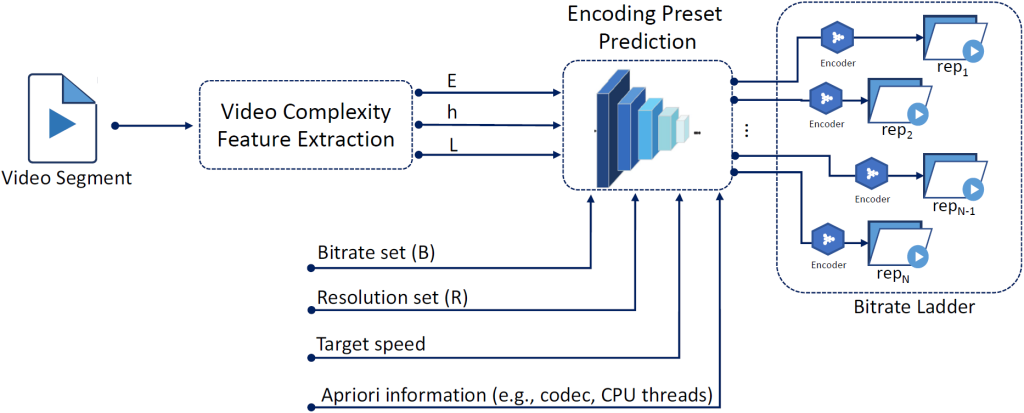
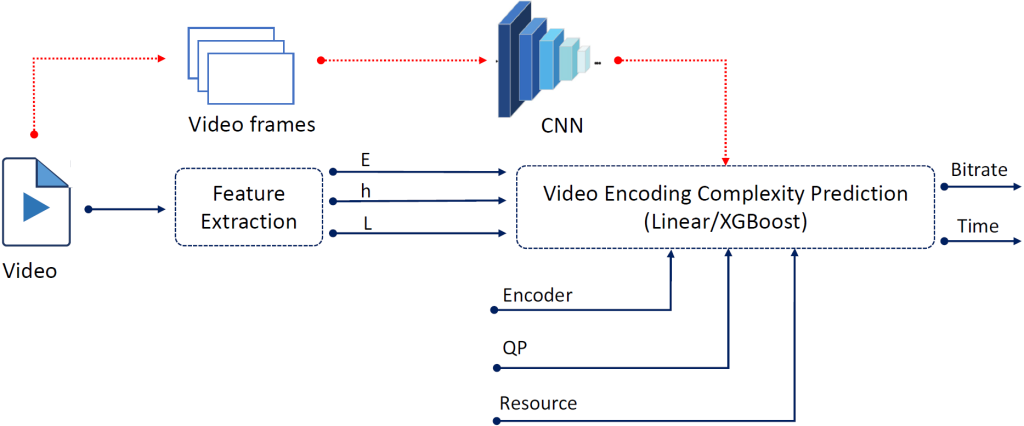
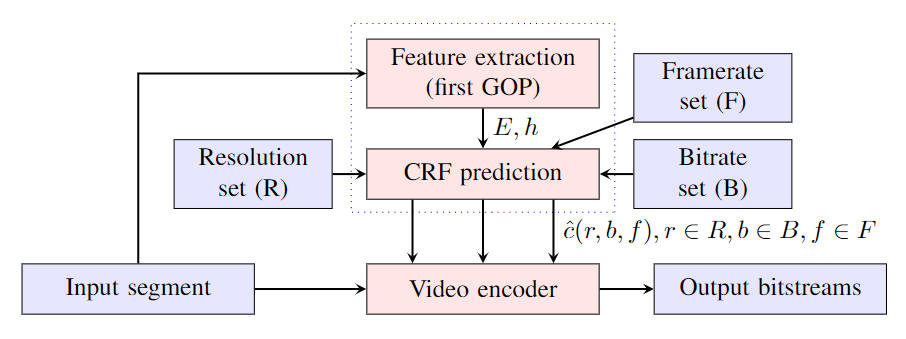
Abstract: Live video streaming is expected to become mainstream in the fifth-generation (5G) mobile networks. Optimizing video encoding for live video streaming is challenging due to the latency introduced by any optimization method. In this talk, we introduce low-latency video optimization methods that are utilized to improve the quality of video encodings by predicting optimized encoding parameters.
Hadi Amirpour is a postdoc research fellow at ATHENA directed by Prof. Christian Timmerer. He received his B.Sc. degrees in Electrical and Biomedical Engineering, and he pursued his M.Sc. in Electrical Engineering. He got his Ph.D. in computer science from the University of Klagenfurt in 2022. He was appointed co-chair of Task Force 7 (TF7) Immersive Media Experience (IMEx) at the 15th Qualinet meeting. He was involved in the project EmergIMG, a Portuguese consortium on emerging imaging technologies, funded by the Portuguese funding agency and H2020. Currently, he is working on the ATHENA project in cooperation with its industry partner Bitmovin. His research interests are image processing and compression, video processing and compression, quality of experience, emerging 3D imaging technology, and medical image analysis.
14th – 17th June 2022 | Athlone, Ireland.
The ACM Multimedia Systems Conference (MMSys) provides a forum for researchers to present and share their latest research findings in multimedia systems. While research about specific aspects of multimedia systems is regularly published in the various proceedings and transactions of the networking, operating systems, real-time systems, databases, mobile computing, distributed systems, computer vision, and middleware communities, MMSys aims to cut across these domains in the context of multimedia data types.
This year, MMSys hosted around 150 on-site participants from academia and industry. Five ATHENA members traveled to Athlone, Ireland, to present four papers by Reza Farahani, Babak Taraghi, and Vignesh V Menon in two tracks, i.e., Open Dataset & Software Track and Demo & Industry Track.


Moreover, two presentations in Mentoring & Postdoc Networking event by ATHENA postdocs:

We will present the poster “The Power in Your Pocket: Boosting Video Quality with Super-Resolution on Mobile Devices” at the Austrian Computer Science Day 2022 conference. The poster will summarize our research about improving the visual quality of video streaming on mobile devices by utilizing deep neural network-based enhancement techniques.
Join us at the Institute of Science and Technology Austria (ISTA) in Vienna on June 21.
Here is the list of papers that we cover in the poster:
We cordially invite you to join the Long Night of Research / Lange Nacht der Forschung at the University of Klagenfurt on May 20, 2022, 4pm-11pm.
ATHENA will be present with two booths as follows.
#1: L70: How does video streaming work! (Lakeside Park, B12b.1.1)
More than 60% of the internet data volume is video content consumed via streaming services like YouTube, Netflix, or Flimmit. We show how video streaming services work. It is essential that the quality of the videos is played back as optimally as possible on various end devices. With us, you can gain practical experience and get to know differences in the quality of perception. In particular, we will show an animation video of how video streaming actually works, and visitors will be able to experience videos of different qualities and run some exciting experiments.


#2: U25: How to make video streaming faster and better! (Main University Building; jointly with Bitmovin)
Bitmovin, founded by graduates and employees of the University of Klagenfurt, is a global leader in online video technology. The aim is to develop new technologies that will improve the video streaming experience in the future, for example, through smooth image quality. We will show you the latest achievements from ATHENA and how video streaming can become even more innovative in the future.


Video Complexity Analyzer (VCA) and Video Complexity Dataset (VCD) were presented by Hadi Amirpour and Vignesh Menon in the NORM session of the VQEG meeting on 11 May 2022, in Rennes, France.
The presentation video of VCA is available here.