
VCIP 2025 in Klagenfurt: Advancing Sustainable and Trustworthy Visual Communications in the Age of AI
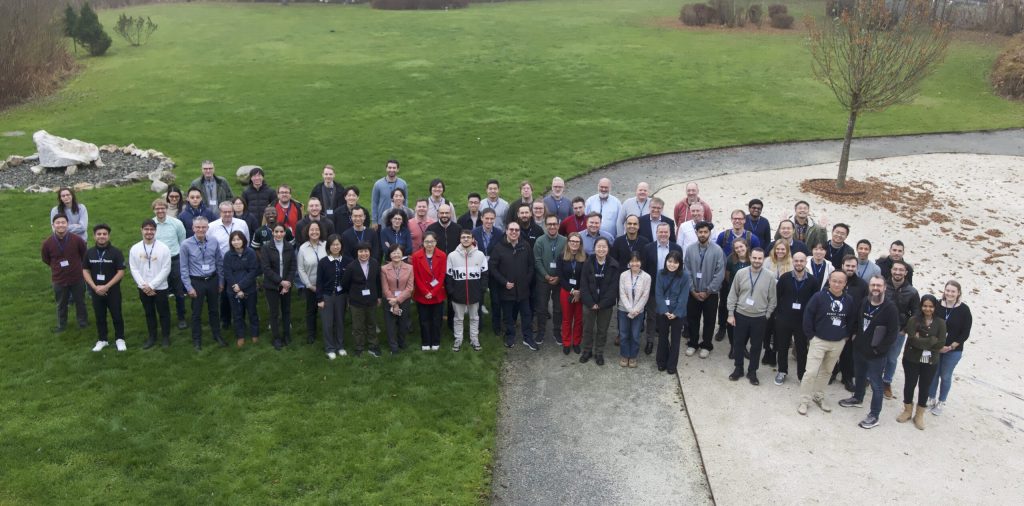
From December 1–4, 2025, the Department of Information Technology (ITEC) at the University of Klagenfurt (Austria) hosted the International Conference on Visual Communications and Image Processing (VCIP 2025), welcoming an international community of researchers, practitioners, and industry experts to discuss the future of visual communication and image processing. Under the theme “Sustainable and Trustworthy Visual Communications in the Age of AI,” the conference addressed some of the most pressing challenges and opportunities facing the field today.
A forum for cutting-edge research and dialogue
VCIP 2025 continued the long-standing tradition of the conference as a premier venue for both foundational and applied research. Over four days, the program offered a diverse range of tutorials, overview talks, keynotes, oral and poster sessions, and interactive formats. Discussions ranged from adaptive and low-latency streaming, source coding, and compressed-domain processing to volumetric media, computational vision, quality assessment, and AI-driven restoration and enhancement techniques.
Inspiring keynotes on trust, sustainability, and clarity
A particular highlight of VCIP 2025 were the three keynote talks, which set the tone for the conference by connecting technical innovation with broader societal concerns. The speakers addressed trustworthy multimedia communication in the era of AI-generated content, the environmental impact and sustainability of visual technologies, and the role of visual analytics in making complex data understandable across time and space. Together, the keynotes sparked lively discussions that extended well beyond the conference halls.
Tutorials, overview talks, and emerging topics
Four half-day tutorials provided in-depth insights into current and emerging technologies, including generative face video coding for ultra-low bitrate communication, JPEG AI standardization and implementation, the convergence of low-level image processing and generative AI, and the past, present, and future of volumetric video. Complementing these, overview talks offered broader perspectives on emotion and quality estimation, AI-enabled video streaming efficiency, 3D scene capture and compression, and the use of large vision–language models for visual quality assessment.
Supporting early-career researchers and innovation
VCIP 2025 placed strong emphasis on nurturing the next generation of researchers. The doctoral symposium and the VSPC Rising Star session provided a platform for early-career scientists to present their work and engage with senior experts. Demo, open-source, and dataset sessions further highlighted the practical impact of research, showcasing tools, prototypes, and resources that bridge theory and application.
Exchange beyond the technical program
In addition to the scientific sessions, the conference offered a vibrant social program, including a welcome reception, a Glühwein gathering, a conference banquet, and a closing ceremony with awards. These events fostered informal exchange, strengthened international collaboration, and contributed to the open and collegial atmosphere that characterizes VCIP.
Best paper award: “AlignGS: Aligning Geometry and Semantics for Robust Indoor Reconstruction from Sparse Views”, Yijie Gao, Houqiang Zhong, Tianchi Zhu, Li Song, Zhengxue Cheng, Qiang Hu (Shanghai Jiao Tong University)
Rising Star: Heming Sun (Yokohama National University), “Traditional and Learned Image and Video Coding: From Algorithms to Implementations”
A successful event for Klagenfurt and the department/university
Hosting VCIP 2025 marked an important milestone for the Department of Information Technology (ITEC) at the University of Klagenfurt, reinforcing its international visibility in the fields of visual computing, multimedia systems, and artificial intelligence. By bringing together experts from academia and industry and opening selected sessions to the wider university community, the conference created valuable opportunities for interdisciplinary exchange and long-term collaboration.
VCIP 2025 concluded with a strong sense of momentum, underscoring the importance of responsible, transparent, and sustainable approaches to visual communication in an AI-driven world. The discussions and connections formed in Klagenfurt will continue to shape research and innovation in the field well beyond the conference itself.
Following a successful edition in Klagenfurt, VCIP 2026 will take place in Singapore from December 13–16, 2026, focusing on “Visual Communications and Image Processing at the Frontiers of Generative and Perceptual AI” (https://vcip-2026.org/).