Optimizing QoE in Live Streaming over Wireless Networks using Machine Learning Techniques
CHIST-ERA Conference 2022 [Website][Abstract]
May 25, 2022, Edinburgh, UK
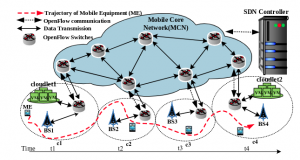
Empowered by today’s rich tools for media generation and collaborative production and the convenient wireless access (e.g., WiFi and cellular networks) to the Internet, crowdsourced live streaming over wireless networks have become very popular. However, crowdsourced wireless live streaming presents unique video delivery challenges that make a difficult tradeoff among three core factors: bandwidth, computation/storage, and latency. However, the resources available for these non-professional live streamers (e.g., radio channel and bandwidth) are limited and unstable, which potentially impairs the streaming quality and viewers’ experience. Moreover, the diverse live interactions among the live streamers and viewers can further worsen the problem. Leveraging recent technologies like Software-defined Networking (SDN), Network Function Virtualization (NFV), Mobile Edge Computing (MEC), and 5G facilitate providing crowdsourced live streaming applications for mobile users in wireless networks. However, there are still some open issues to be addressed. One of the most critical problems is how to allocate an optimal amount of resources in terms of bandwidth, computation power, and storage to meet the required latency while increasing the perceived QoE by the end-users. Due to the NP-complete nature of this problem, machine learning techniques have been employed to optimize various items on the streaming delivery paths from the streamers to the end-users joining the network through wireless links. Furthermore, to tackle the scalability issue, we need to push forward our solutions toward distributed machine learning techniques. In this short talk, we are going first to introduce the main issues and challenges of the current crowdsourced live streaming system over wireless networks and then highlight the opportunities of leveraging machine learning techniques in different parts of the video streaming path ranging from encoder and packaging algorithms at the streamers to the radio channel allocation module at the viewers, to enhance the overall QoE with a reasonable resource cost.